opinion · September 7, 2026
Maybe the Uvalde Police Response Was More Complicated Than We Want to Admit
Seventy-seven minutes sounds indefensible. Then you look at what the officers were actually facing—and the story gets a lot more complicated.
When I first learned the details of the Uvalde school shooting, I had the same reaction as almost everybody else.
Seventy-seven minutes? What the fuck were they doing?
Nineteen children and two teachers were murdered at Robb Elementary while armed police officers were in the building. From the outside, the story practically writes itself: cops were scared, kids were dying, and nobody had the balls to go through the door.
Then I slept on it.
And the more I thought about the actual tactical situation, the less comfortable I became with that simple version of the story.
And this is part of why people still react so viscerally to Uvalde. Since Columbine in April 1999, school shootings at K-12 schools have left at least 218 people dead and 512 wounded. By now, these tragedies are no longer rare national ruptures. They are part of modern American life.
That doesn't mean I suddenly think the response was perfect. The Justice Department conducted a massive review and concluded that law enforcement failed by allowing what began as an active-shooter response to turn into a barricaded-subject response. That's serious, and I don't dismiss it.
But every active-shooter situation is unique.
This particular shooter wasn't just "in a classroom."
He had turned that classroom into a killing position.
He had an AR-style rifle, cover, concealment, and one enormous advantage: he knew exactly where the police had to come from.
The officers outside didn't know precisely where he was standing, what he could see, whether he was aiming at the door, or what was waiting on the other side.
The shooter didn't have that problem.
He could sit behind cover, point his rifle toward the only realistic avenue of attack, and wait for the first body to fill the doorway.
That's not a normal room entry.
That's walking into an ambush.
What they were up against
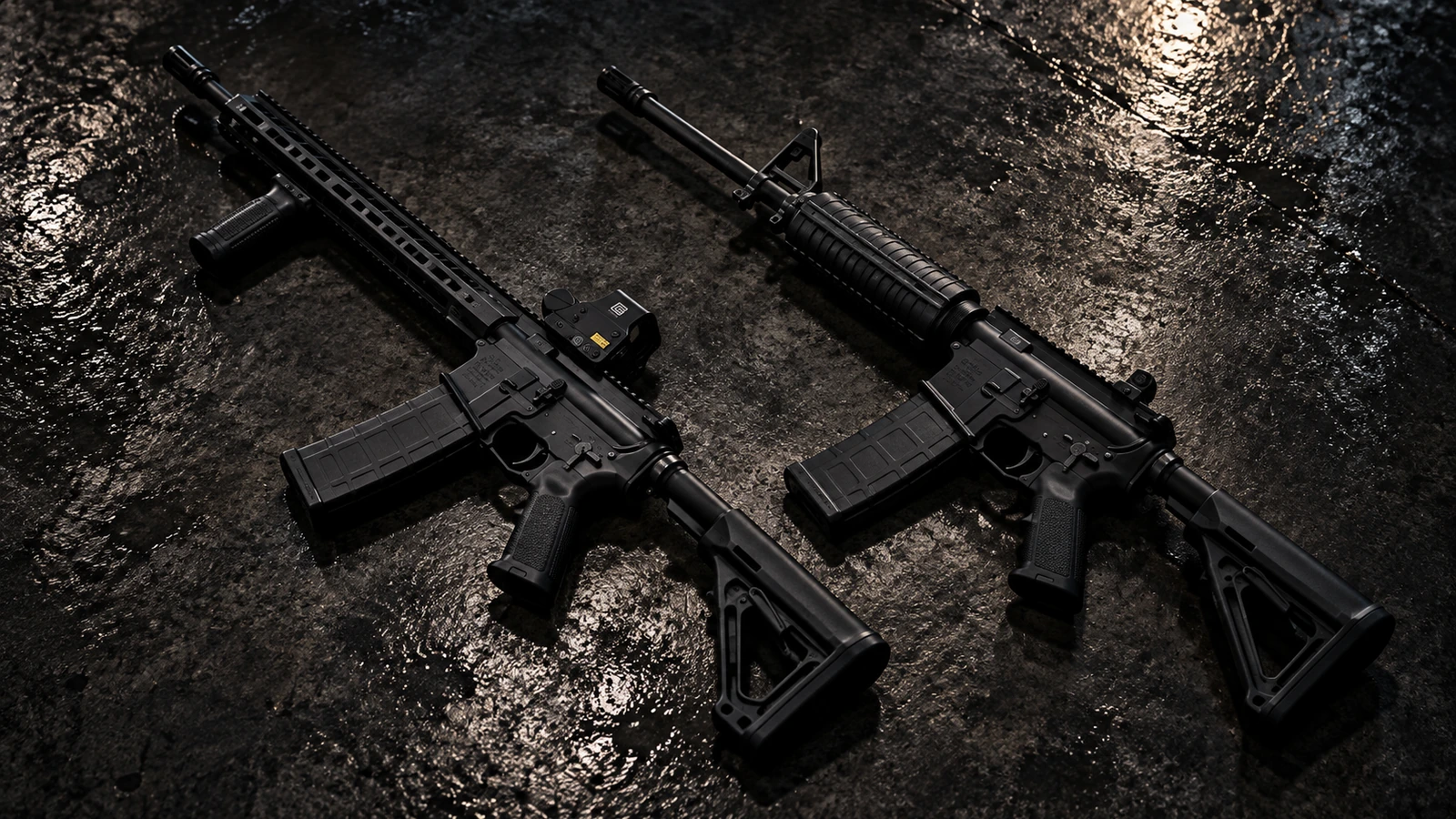
This is the part people tend to abstract away. “AR-style rifle” sounds clinical until you picture the actual kind of weapon waiting on the other side of the door.
The attacker had assembled two menacing rifles before the shooting. That matters because it reminds people this was not some vague threat in a classroom. It was a heavily armed killer with the kind of firepower that can dominate a hallway.
The first officers actually did move toward him.
They were met with rifle fire and pulled back.
That's where the argument gets complicated.
It is easy for me, sitting safely behind a computer, to say, "Just rush him."
But rushing an entrenched rifleman through a predictable point of entry can get people killed very quickly. And dead police officers aren't rescuing anybody.
Meanwhile, police weren't literally doing nothing. Other children and teachers still had to be protected and evacuated. You also had to prevent the shooter from somehow leaving those classrooms and reaching another part of the school. Even the Texas House investigation recorded officers discussing the ongoing evacuations and trying to protect "the rest of the lives first" while preparations for the breach continued.
That's the part I think gets flattened when this story gets reduced to "hundreds of cops stood around for an hour."
There was a second nightmare happening at the same time: an entire school full of children who also needed to get out alive.
And then BORTAC entered the picture.
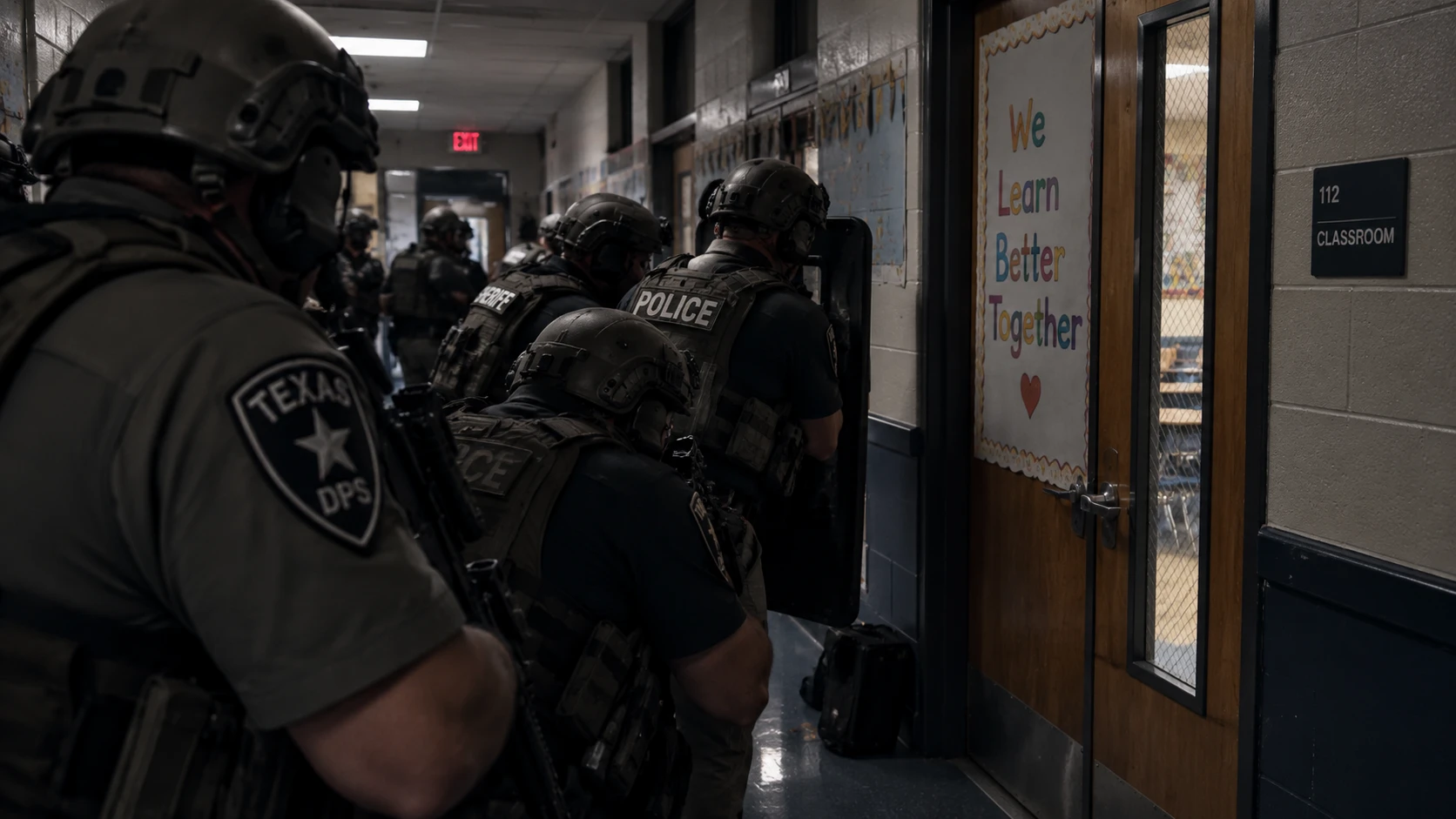
Around 12:30, officers began stacking near classrooms 111 and 112 in anticipation of a breach. At 12:50, the entry team went through the door and killed the shooter.
That's roughly twenty minutes from that final tactical buildup to going through a doorway toward a man holding a rifle who knew they were coming.
Whatever else you think about Uvalde, that particular act took balls.
This is where my opinion differs slightly from the official criticism.
I understand why active-shooter doctrine says officers must push toward the threat. Every second potentially matters when injured people are trapped with the shooter. The DOJ's conclusion was that officers had sufficient personnel and equipment and should have continued pressing the attack instead of allowing the situation to become a prolonged barricade.
That's a legitimate criticism.
My hesitation is pretending that doctrine makes the tactical reality disappear.
Police commanders were balancing horrible choices: attack a heavily armed man holding an advantageous position, evacuate hundreds of other potential victims, contain him so he couldn't move elsewhere, locate keys and equipment, organize an entry team, and somehow do all of that while having incomplete information about what was happening behind the classroom walls.
Could they have breached sooner?
Probably.
Should leadership have recognized sooner that children inside those rooms could still be alive and desperately needed them?
Yes.
The DOJ's report makes a powerful case for exactly that.
But I no longer look at those seventy-seven minutes and automatically conclude that every officer in that hallway was a coward.
That's too easy.
Some officers moved toward gunfire almost immediately. Some worked on getting other children out. Eventually a tactical team stacked up outside the classrooms and went directly into a rifleman's kill zone to end it.
Those things can be true at the same time that the overall command response was badly flawed.
Maybe that's the uncomfortable lesson of Uvalde.
Real disasters don't always give us clean heroes and villains.
Sometimes brave people make bad decisions. Sometimes reasonable tactical concerns turn into catastrophic hesitation. Sometimes the safest decision for one group of children creates greater danger for another.
And sometimes the people watching afterward know exactly what should have been done because we have something the people standing in that hallway never had:
We already know how the story ends.
Sources & documentation
U.S. Department of Justice — Critical Incident Review of the Robb Elementary response
Texas House of Representatives — Robb Elementary Investigative Committee Report