social media · September 24, 2026
Nobody gets famous on X and they want to keep it that way.
On X blue checks are rented and the fame they promise never arrives.
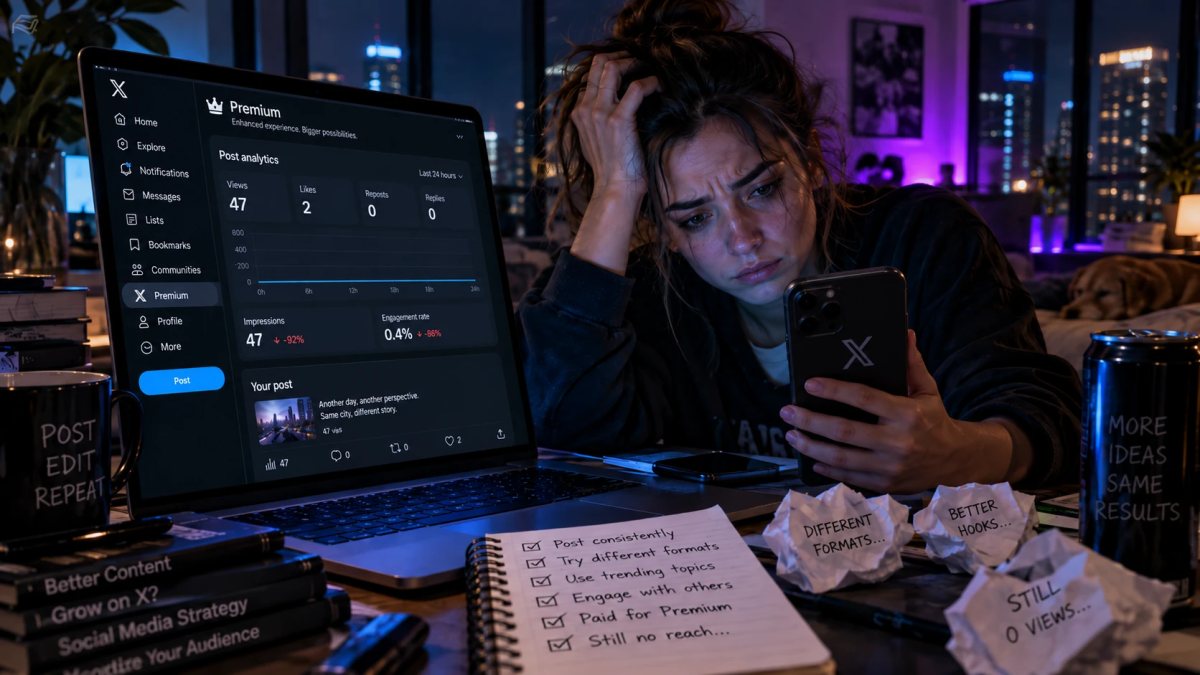
X is all microphones and no speakers.
Everybody is talking. Elon is talking. Politicians are talking. Journalists are watching politicians talk and writing stories about what they said, and everybody jumps back on X to argue about the story. Spend enough time inside that loop and X starts to feel like the center of the internet. Keep reading and I'll show you how that couldn't be further from the truth. Believe me, I used to think X was some type of social hub myself. Then I built the Hot 250 and actually started counting people. I wasn't researching X. I was collecting the social audiences of 250 celebrities, athletes, musicians, models and influencers so I could rank them using the accounts they have across Instagram, X, TikTok and YouTube. All 250 spots are now completely filled.
When everything was finished I looked at X and suddenly it looked tiny.
Run the numbers across the list and the median Instagram account is sitting around 5.9 million followers. The median X account is around 600,000. I expected Instagram to win. I didn't expect X to look like it only existed in it's own simulation.
Selena Gomez makes the point before you even look at the rest of the spreadsheet: roughly 403 million on Instagram and 63 million on X. That's one of the most famous women alive, and her X audience is a fraction of what it is everywhere else.
Once you start noticing it, you see it everywhere. The celebrities are famous before they get to X. The athletes are famous before they get to X. The musicians, actors and models became famous somewhere else and brought whatever audience bothered following them over. Remember the Hawk Tuah girl? She became famous on TikTok before moving to X where she talked about how great the platform was, only to do a crypto rug pull and bounce. Then there are the streamers like Clavicular and Jack Doherty who come to X only to talk about the fame they already acquired.
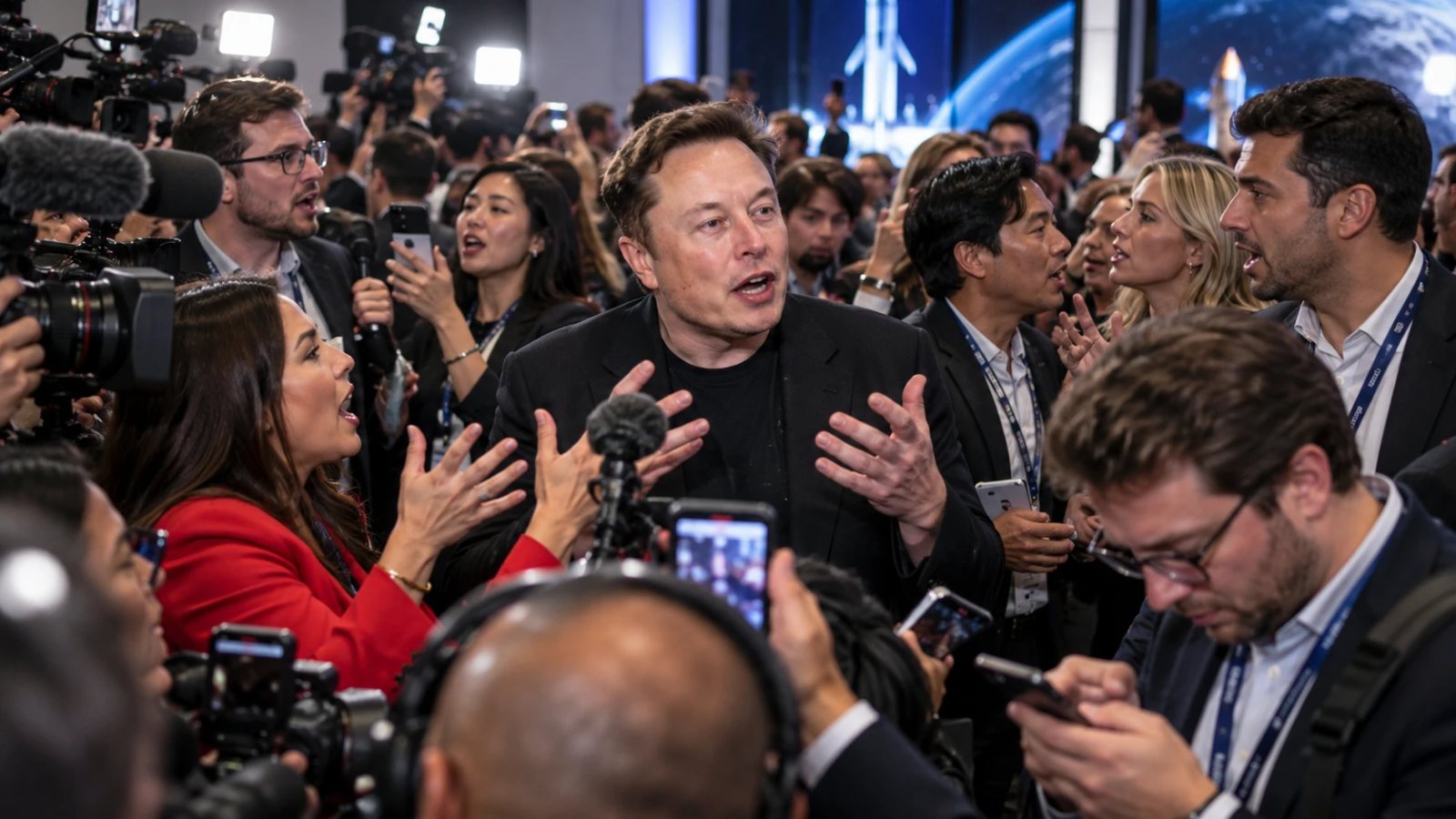
Nobody ever got famous on X.
Yes, I'm exaggerating for effect. There are obvious internet personalities who built careers partly on Twitter. But compare X with YouTube, TikTok or Instagram. Those platforms routinely manufacture celebrities. Somebody can be completely unknown, start posting videos, and eighteen months later have ten million people following them and brands throwing money at them. At best X amplifies the reach of people who were already famous. That's a totally different thing than creating new stars.
The demographics help explain why. Pew's 2025 numbers show that 55% of American women use Instagram and 42% use TikTok. Only 16% use X. Men use X considerably more than women. Perhaps that's why it's a hotspot for OnlyFans creators to do promotions (many of which are puppeted by gig workers or agencies).
When you factor in the majority of celebrity and influencer culture is driven by women the picture becomes even more clear. Models, actresses, female musicians, beauty creators and athletes often have enormous audiences while their X account looks almost bizarrely small. It's not that millions of their fans disappeared. Most of those fans were never hanging around X in the first place. Heck many female celebs and influencers avoid X entirely. If they do have a profile on there it's probably handled by a PR agent or an underpaid intern. Or they just leave it to collect dust.
There is one female category where X starts making a lot more sense...
Adult content creators using sexually explicit or highly provocative content as part of their business. X openly allows consensually produced adult nudity and sexual behavior when it is properly labeled. That makes the platform useful for something Instagram and other mainstream social networks aggressively limit: teasing people with a preview of your adult content before sending them to your OnlyFans page.
You can actually see that exception inside the Hot 250. Sophie Rain has about 3.5 million followers on X, which is a much stronger X showing relative to her audience than you see from many mainstream actresses and models. Amouranth is even more striking in the current data: about 3.8 million on X versus 844,000 on Instagram.
Currently Amouranth is using X to promote ludes from her "AI Twin".
That doesn't mean X suddenly has a giant female audience. It means X has a product that works particularly well for one corner of that market. People know they can open the X app and find material they won't find on Instagram, giving adult creators the opportunity to build unusually strong followings there. For everyone else, X increasingly looks like something different from a typical social network...
It looks like politics, news and commentary.
Pew Research found that 59% of X users say keeping up with politics is one reason they use the platform (compared with only 26% of Instagram users). Nearly three quarters of X users say they consume at least some political on content there.
However X isn't exactly the best place to get the news either. Hop on at any time of the day or night and scroll your feed and you're sure to find several compelling stories that are completely fake news. Many of them are generated by AI or scammers who are trying to get paid from the X monetization program by creating artificially provocative stories that are meant to get clicks with no regard for the truth. If you're really looking for news you'd be better off on a social network like snewsly.
That explains how the illusion works.
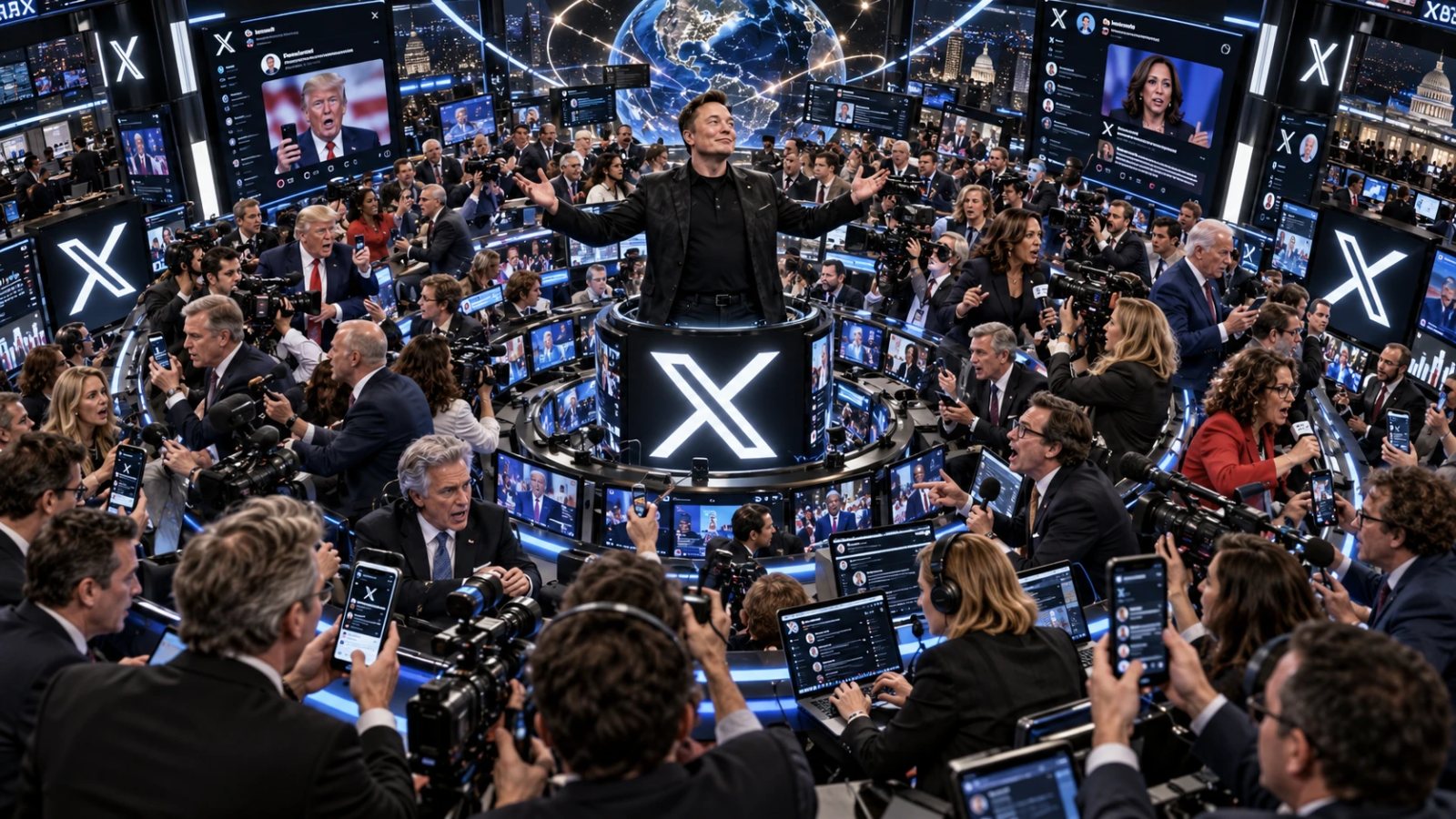
X doesn't need hundreds of millions of ordinary people following every actress and pop star. It needs journalists, politicians and armchair activists and obsessively watching over one another another like an elaborate game of cat and mouse.
A politician posts. A reporter sees it. Another reporter writes about the reaction. Television covers the story. YouTubers cover the television coverage. By dinner, something that happened inside a relatively small social network somehow feels like a global conversation. Yet it was all manufactured. They were trying to convince you.
And then Elon killed the one little symbol that used to make some of these discrepancies impossible to ignore. Under the old Twitter verification system, the blue check told you the platform had determined that an account was active, notable and authentic. Today a blue check primarily means the account subscribes to X Premium and meets X's eligibility requirements; X explicitly says Premium accounts are no longer evaluated under the old notable-and-authentic standard. In other words they mean nothing. It's like obtaining a sherrif's badge from a Cracker Jack box.
You find a woman with 25 million Insta followers and 700,000 followers on X...
No verification badge. Instinctively, you wonder whether you've found the wrong account. Maybe it's a fan page. Maybe it's an impersonator. Or maybe that's really her and she doesn't care about X, just like most of her audience doesn't care either.
I'm not saying Elon changed verification specifically to conceal that problem. I can't prove his motive, and neither can anyone looking at these numbers. But the effect is undeniable: the old verification system made it much easier to know when you were looking at the genuine celebrity account. The new one makes that distinction considerably murkier. And that matters because once you remove the ambiguity and start matching the real people to the real accounts, X's place in the social-media hierarchy looks very different. It isn't empty. It isn't irrelevant. It may actually be unusually powerful because so many people with microphones are standing inside it.
But that's not the same thing as having a captive audience of fans.
That's what the Hot 250 accidentally exposed for me. X doesn't look like the place where fame is being created. It looks like the place where politicians, journalists, Elon Musk fans, commentators and a few specialized communities talk loudly enough that everybody outside the room hears them. But everyone on the inside is just talking.
FACT: Automated bots and AI agents officially surpassed human web traffic for the first time in internet history in mid-2026.